Your shelves, on your e-reader
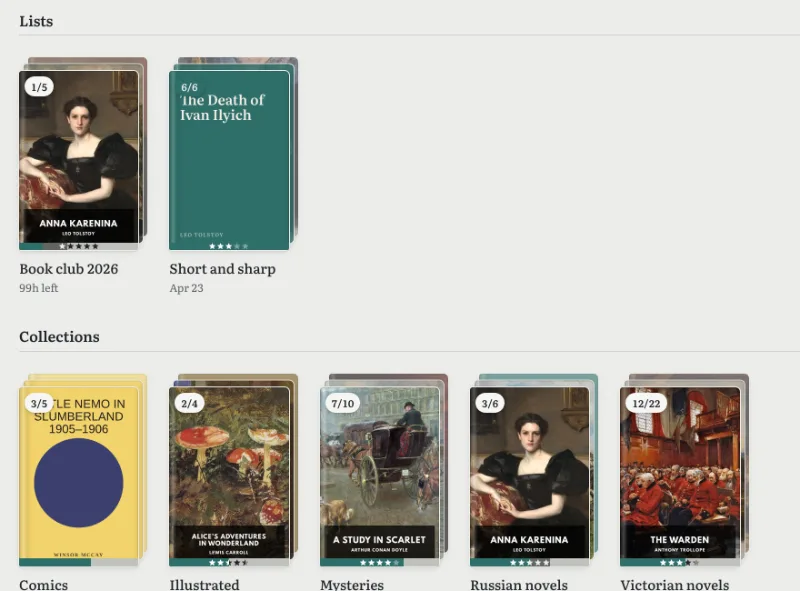
Every list and collection you make becomes a collection on your e-reader: by series, by mood, by book club. Change one in Bookcanon and the e-reader follows at its next sync. How Kobo sync works
Private beta · the waiting list is open
Bookcanon sends the ebooks you already own to your e-reader over Wi-Fi, from Google Drive, Nextcloud or Komga, shelved in your collections, and keeps your place on every device you read on. Then it quietly keeps the record: what you read, for how long, and every line you marked.

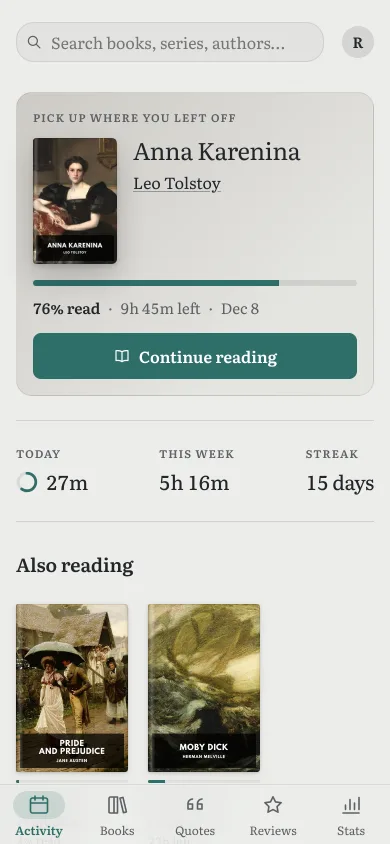
Shown with a demo library of public-domain classics. The e-reader is a drawing.
Works with the books and the devices you already have
How it works
Pick a folder in Google Drive, or connect Nextcloud, any WebDAV server, a NAS or a Komga. Your files stay where they are; Bookcanon reads them from there.
On a Kobo, one line in a settings file, once, over USB: no jailbreak, nothing installed, and changing it back undoes it. KOReader, on whatever it runs on, comes next. We show you exactly where.
Your books arrive over Wi-Fi with their covers, sorted into your collections. From then on every sync also keeps your place and the record of your reading.
What you get
Every list and collection you make becomes a collection on your e-reader: by series, by mood, by book club. Change one in Bookcanon and the e-reader follows at its next sync. How Kobo sync works
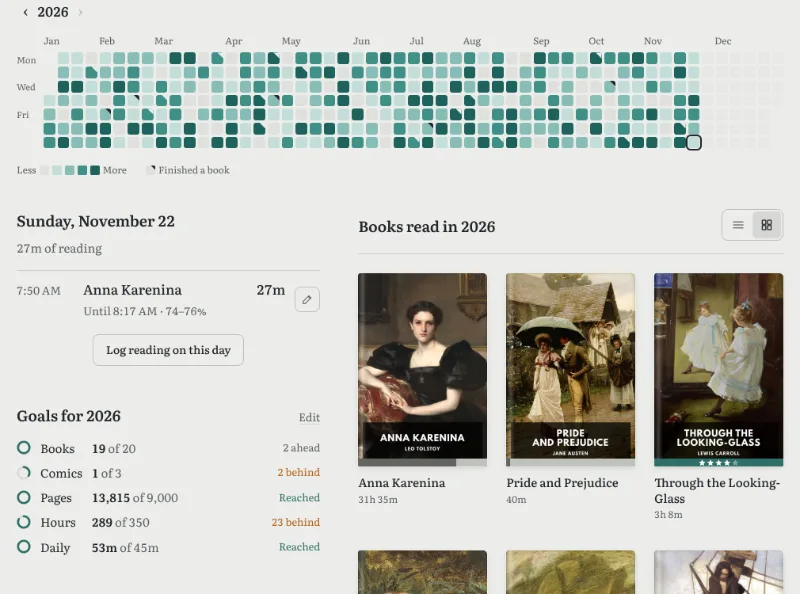
Time read each day, streaks, and a calendar of the whole year, straight from what your e-reader reports. Nothing to start, stop or remember. The reading tracker
For the book in your hands, the rest of its series, or your whole backlog, at the pace you really read.
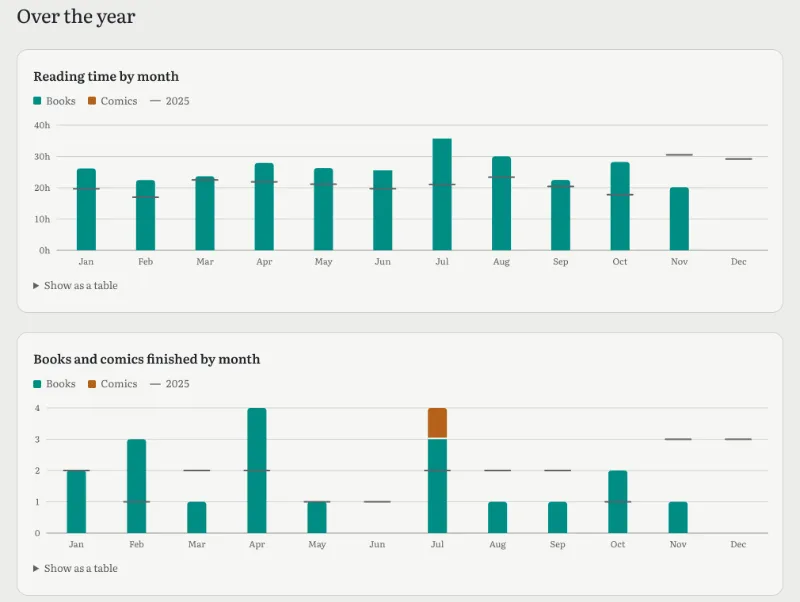
Hours by month, books finished, pages an hour, when in the day you read, your authors. Books and comics counted apart, years side by side.
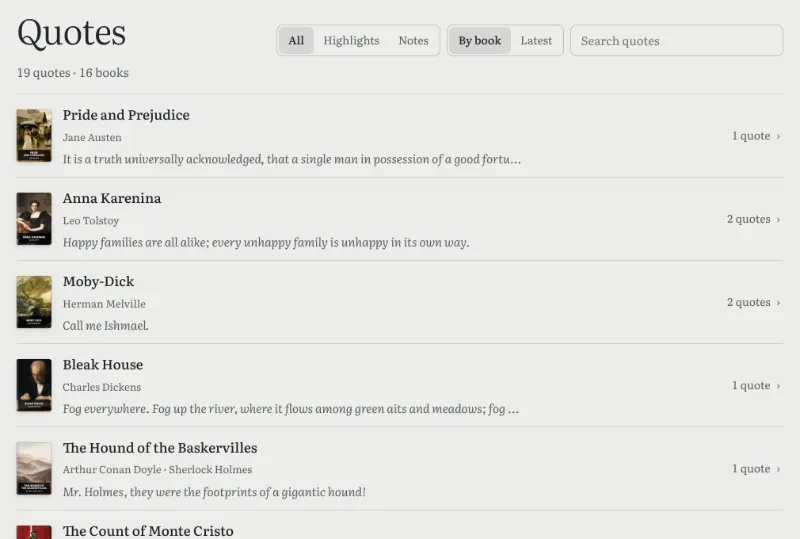
Your highlights and notes from every device in one searchable place, book by book, ready to copy out as Markdown. Kobo highlights
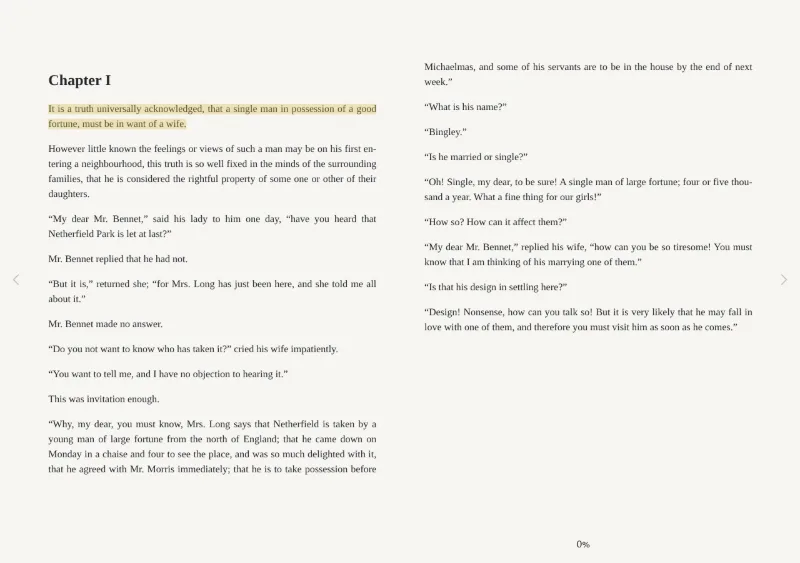
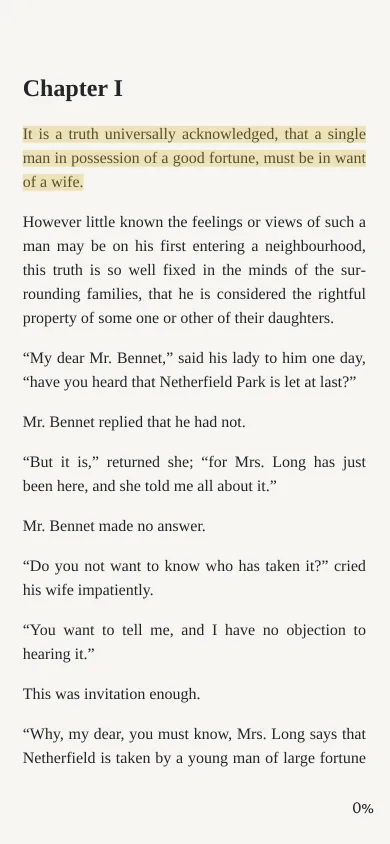
Open the same book in your browser or on your phone, on the page where the e-reader stopped. The time counts, and the e-reader catches up.
Line up what to read next. Finish a book and the next one of its series takes its place, on your e-reader too.
Books, pages, hours or minutes a day, each with how far along you are and whether you’re ahead.
Add a book by its ISBN and log it by hand. One record, whatever you read it on.
Drop in a Kobo’s own database and your past reading and highlights are there from the start.
CBZ, CBR and PDF sit beside your EPUBs and open in the browser, with a pace of their own so the numbers stay honest.
Plain, script-free pages of your reading, light enough for an e-ink screen.
Install it from the browser, or as an Android app. It opens offline with your last reading.
Each person has their own account, their own books and their own record, on as many devices as they like. Nothing is mixed.
Every device, one place
Read on the e-reader in bed, on your phone on the bus, in a browser at lunch. Bookcanon keeps one place in each book for all of them, and one record of all the time you spent, so nothing is read twice or counted apart.
Each device says where you stopped as it syncs; the next one you open starts there.
Collections, your backlog and new books reach every device at its next sync.
Minutes read on any device add up to the same streaks, stats, goals and year in review.
Kobo and any browser today. KOReader next, and with it PocketBook, Kindle, Boox, reMarkable and more.
Year in review
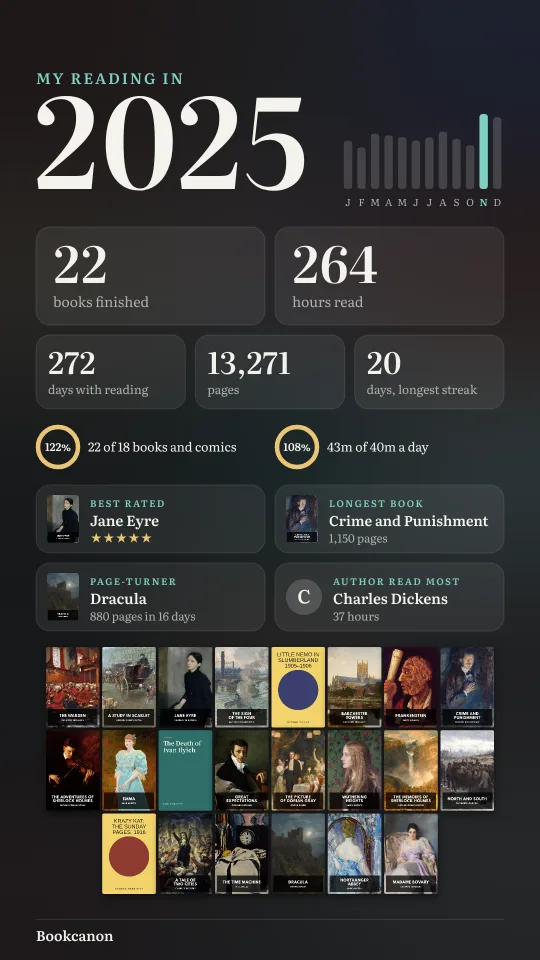
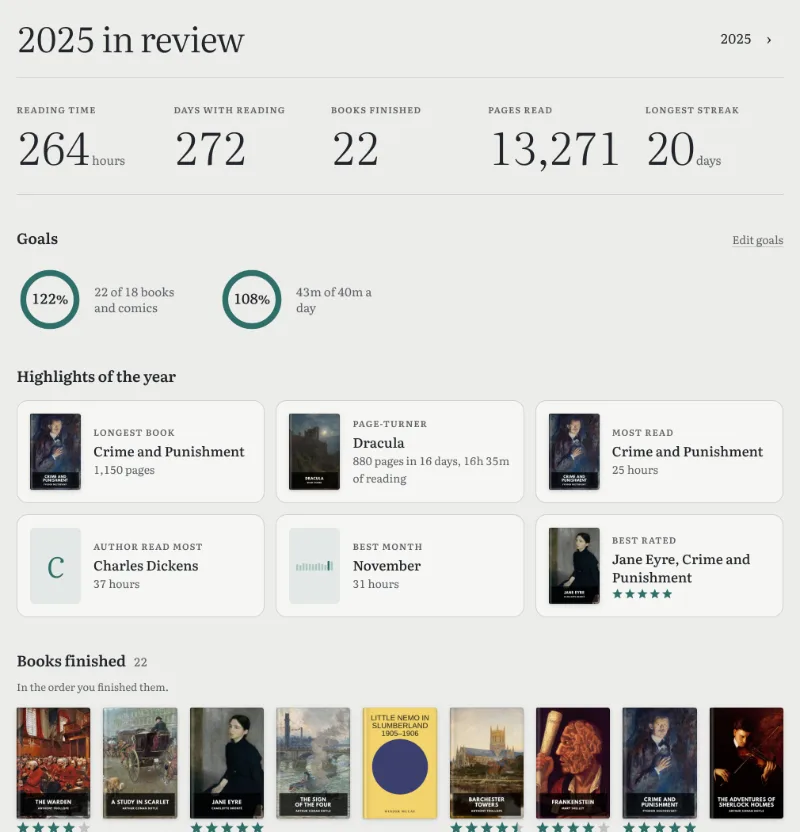
When the year turns, Bookcanon already has the story: hours read, days with a book, the longest one, the page-turner, the author you couldn’t put down, every cover you finished.
Keep it to yourself, save it as a picture for your stories, or share a page with a link of its own. You choose what’s on it.
Yours, all of it
Books are read from your own Drive, server or Komga. There’s no store here, nothing to buy twice, and no DRM added.
Each reader’s record lives in its own database, backed up encrypted. Not a row in someone’s giant table.
Export your books for Goodreads, The StoryGraph or Hardcover, your highlights as Markdown, and the whole record as plain data.
No ads, no selling what you read. Bookcanon is paid for by its readers, which is why it can stay on your side.
Your e-reader keeps working as it did. On a Kobo, the store’s books arrive as they always have; Bookcanon adds your own library beside them, and remembers.
Pricing
Bookcanon will be a paid subscription, because a service that knows what you read should answer to you and no one else. The price will be announced before the beta opens up, and the people on the waiting list hear it first.
Bookcanon beta
By invitation
Questions
Bookcanon is a service for people who read ebooks of their own. It sends them to your e-reader over Wi-Fi, from Google Drive, a WebDAV server such as Nextcloud, or Komga, with your collections, and keeps your place as you move between the e-reader, your phone and your browser. And it keeps a private log of your reading: time read, books finished, highlights and notes, goals and a year in review.
Today, Kobo e-readers, through the sync they already do with the Kobo store. Next is KOReader, the free reading app that runs on PocketBook, Kindle, Boox and other Android devices, reMarkable and more, so almost any e-reader can join. And every book opens in Bookcanon’s own reader in a browser or on a phone.
Yes. Each device tells Bookcanon where you are at its sync, and the others pick up from there: stop on the e-reader, carry on on your phone in a queue, and the e-reader opens on that page at its next sync. The time read on each counts toward the same record.
No. On a Kobo, you change one line in a settings file on the Kobo, once, with the Kobo plugged into a computer. Nothing is installed on the Kobo and its software isn’t modified. Changing the line back puts everything as it was.
Bookcanon uses the sync that Kobo e-readers already do with the Kobo store, so it is meant for the Kobos of recent years, such as the Clara, Libra, Sage and Elipsa lines. During the beta we’ll confirm your model with you before you set anything up.
Yes. Books you buy from Kobo keep arriving as before, with your Kobo account. Bookcanon adds your own library beside them.
Your books stay in your Google Drive, on your WebDAV server or in your Komga. Bookcanon reads them from there to send them to your devices, and keeps a working copy for a while so the next sync is quick. It has no store of its own and never shares your files with anyone.
EPUB and KEPUB ebooks go to your Kobo; EPUBs are converted to Kobo’s own KEPUB as they are sent, so the Kobo’s reading statistics and time left work. PDFs and comics as CBZ or CBR are part of your library too, and open in Bookcanon’s reader in the browser. Files must be free of DRM.
Bookcanon will be a paid subscription with no ads. The price isn’t set yet: it will be announced before the beta opens up, and people on the waiting list will hear it first. Joining the list is free and commits you to nothing.
Yes. You can read your books in Bookcanon’s reader in a browser or on a phone, where the log writes itself too, and add paper books and audiobooks by hand.
It is a private record rather than a social network: nobody sees your reading unless you share a page of it. It works well beside them. You can export your books as a file that Goodreads, The StoryGraph and Hardcover import.
Take everything with you: your books and ratings as a spreadsheet, your highlights as Markdown, and the full record as plain data. Then change the one line on your Kobo back, and it syncs with Kobo alone again.
Private beta
Bookcanon is opening to a few readers at a time. Leave your address and we’ll write once, when there’s a place for you.